

Institute of Science Mumbai
Government of Maharashtra emblem

The Institute of Science

Mumbai

Dr. Homi Bhabha State University
Prof. B. M. Udgaonkar

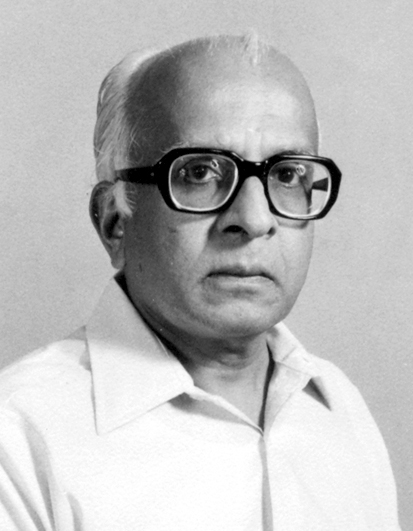
Portrait: Padma Awards, Ministry of Home Affairs

MSc alumnus, Royal Institute of Science · Physics

Prof. B. M. Udgaonkar

Theoretical Physicist, Educationist and Peace Advocate

TIFR and Homi Bhabha Centre for Science Education

Bhalchandra Madhav Udgaonkar combined theoretical particle physics with institution building, science education and advocacy for nuclear disarmament. He helped develop reactor theory in India's atomic energy programme and later nurtured the Homi Bhabha Centre for Science Education.

1927-2014 Theoretical particle physics and science education

Education and early research

Udgaonkar studied Physics and Mathematics at Elphinstone College and completed his MSc at the Royal Institute of Science with first rank. In 1949 he joined the Tata Institute of Fundamental Research and began research under Homi J. Bhabha.

Physics and atomic energy

After training at the French Atomic Energy Commission at Saclay from 1953 to 1955, he built the core of the Reactor Theory Group that became part of BARC. He later led TIFR's Theoretical Physics Group and became known for work on Regge poles and hadron dynamics.

Science education and institutions

Udgaonkar expanded TIFR's educational work through graduate courses, visiting-student programmes and engagement with schools and universities. These efforts contributed to the creation of the Homi Bhabha Centre for Science Education, which he chaired from 1975 to 1991.

Science, society and peace

He wrote widely about education, development and the social responsibility of science. As a member of the Pugwash Council and Executive, he worked for nuclear disarmament and a more equitable international order.

Chronology

Selected milestones

  1. 1949

    Joined TIFR

    Began research under Homi J. Bhabha after his Royal Institute MSc.

  2. 1953-55

    Saclay training

    Trained with the French Atomic Energy Commission.

  3. 1960s

    Theoretical Physics Group

    Led high-energy theoretical physics research at TIFR.

  4. 1975-91

    HBCSE Chair

    Nurtured the Centre's science education and research programmes.

  5. 1985

    Padma Bhushan

    Received the national honour for contributions to science and engineering.

Sources and further reading

This profile is a concise institutional biography based on the referenced public sources.